values

Originally published in December 2007, I’m reposting this as the Christian Nationalists have led us into another war. The me of today loves the Jesus who turned over tables in the temple, who washed the feet of sex workers, who trusted God and knew humans have to do the work of being in Beloved Community (scroll down the page to read about this). I hadn’t yet begun understanding the difference between charity and solidarity. We’re all learning, all the time, if we’re curious.

__________________________________

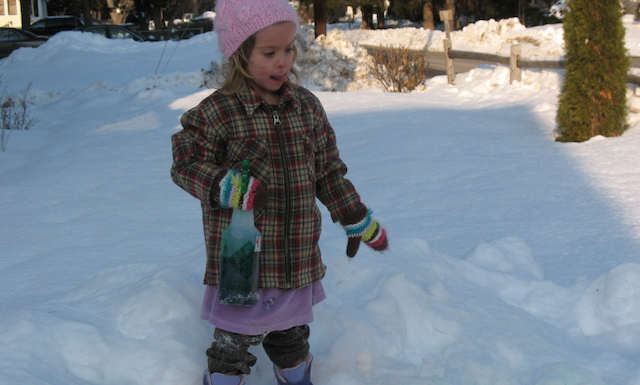
My four year old says, “I’m Mary and this is baby Jesus” and proceeds to sing all the words to “Oh Come, Oh Come, Emmanuel.” The time has come for me to explain why I’m christian. And why I’m not a Christian.

“I’m a Christian” vs. “I’m christian.”

First let’s be clear. I’m not “a Christian.” The right-wing fundamentalists have taken over that term with disturbing voracity. It makes me sick to my stomach to risk being grouped with such generally hateful sorts. Christian (with a C) now means to me, and to so many I talk with, an almost drug induced state of bliss (denial of questions or doubts), glazed eyes (from crying tears of joy when someone is “saved”), rigid rules. Mostly, Christian with a C requires following the strict-father model of living. It means a woman has no right to say what happens to her body. It means taxing the wealthy, stripping social services to nothing, and expecting the poorest among us to support it all. It means same-gender love is wrong. I want nothing to do with Christian with a C.

I am christian, though. I strive to live like Jesus did. That’s the essence of it, how I explain it to my daughter. In four year old terms, it’s pretty simple. Love everyone. Do whatever you can to help rid the world of injustice. Forgive yourself and others for our human frailties. Know that all you can do is your best and that is enough.

The magical fairyland of miracles.

But what about the “miracles,” the loaves and fishes, the healing blindness, bringing people back from the dead? Or, as Baby1 asked today at lunch, “Are angels real?” My answer is also pretty simple. I don’t get hung up on whether or not those things are literally true (it might lean into the sort of magical fairyland kind of thing, would it not?) or if they are only metaphors and lessons. I recognize that humans wrote the Bible, so the stories are most likely stories. I take the lessons from them and move on.

But what about the rising from the dead? Again, I don’t get hung up. Literal or not it isn’t a huge deal to me. The lessons that we’re all Okay, that we are always forgiven for our mistakes, and that the power of god is bigger than any human — that’s enough for me.

The truth is, though, at this moment I believe Jesus literally came back to life. When I’m in my “maybe it didn’t literally happen” times, it doesn’t scare me. Those thoughts fit perfectly in my faith, believing the truth of it as miracle or metaphor doesn’t change the message.

I recognize being raised by a minister and faithfully christian mother has a great deal to do with the likelihood that I’ll not find the story of the resurrection in the land with dragons, trolls, and fairies. Then again, as we all know, it could have pushed me farther away from believing the story. And, again, while I do happen to believe it actually happened, it’s not the biggest part of christianity for me.

I believe christianity is a religion of social justice. Jesus ate with and talked with women. With tax collectors. With sinners and untouchables of all sorts. Talking seriously with such non-people was rebelious enough, but to wash their feet or share a table with them was truly radical. He told poor people that they were the most special of all. He said people should love their enemies. He was a teacher.

After the sadness and revulsion I feel for those people I feel are butchering Jesus’ messages, those cap C’s, I realized there was another great obstacle preventing me from embracing the christian label.

I don’t believe Jesus would want our worship. The Jesus I understand would not want us to bow down to him. He would not want to be treated as someone more special than any other person. He certainly wouldn’t want me calling him “Lord.” Teacher, sure, but Lord, no way.

So, how could I be christian if I won’t pray to Jesus? That’s the question I grappled with for about the last ten years. But my truth has found me and I know now that, for me, being christian means I want to be as much like Jesus as possible. I want to be bold, courageous, and intelligent. I want to stay centered in my connection with god in all times of my life, as much as I can. I want to forgive myself and others every minute of every day. And, most of all, I want to help change the world. I want to help my neighbors near and far. I want people who are suffering to find justice, and I want to help make that happen.

What about Jesus as 100% god and 100% human?
The other hangup I had when I didn’t consider myself christian was the stance that Jesus was 100% God, different than us humans. As with so many of my understandings of my christianity, I realize it’s an issue of translation. The miracles were probably story telling tools. Jesus was a great healer (this is historical fact, not religious belief, though the ideas of what kind of healing he did are disputed), but was he as powerful as god? In my view, no. In my view, Jesus was astoundingly good at staying connected to god. He was clearly “centered” as we might say today. Serene. At peace most of the time. In no great hurry.

Again, I find Jesus to be a role model for my spiritual life. I know from my own experience that staying connected to what I call god keeps me relatively sane. I know peace when I am strongly connected to that strength. It’s my view that Jesus really got it– he found a way to stay connected more often than he was distracted by daily life. He was the ultimately god-connected person. Whether that was through prayer and meditation, through yoga, through great conversations with loved ones, or through times of quiet, I don’t know. But from what I know of the man named Jesus, I can tell he wasn’t easily distracted from his source of peace and strength.

But surely, you won’t stand for the Father Lord King garbage, will you?
No. I won’t stand for it. Mostly. My conception of god is not at all paternal. I certainly don’t think Jesus would dig that kind of reference in this day and age. But, in those days when women were dismissed and not counted, using paternal references to describe power and strength makes sense. In the days of rulers like Kings and Emperors it makes sense that Jesus and others would use the language of the day. Shortcuts, if you will, to explain they believed that god was extraordinarily powerful.
When I go to church with my parents, or continue our search for a church that meets our own family’s needs, I spend a lot of time translating so I can tolerate the paternal and inegalitarian concepts and language used. I usually don’t even like to use a capital letter G on god, it’s too high-and-mighty for me. Through the translation, though, I can still hear the message:

  • Be kind.
  • Be just.
  • Be brave.
  • Care for those who need help.
  • Don’t put up with shit from hateful people.
  • Love yourself and others.
So as Baby1 plays Mary, sings the Christmas hymns with all her might, and hears a bit more of the Christmas story every morning when we sing Oh Come, Oh Come Emmanuel at breakfast, I feel good being christian. I feel honored that our child asks such probing questions, forcing me to articulate in the simplest terms what I believe. I always begin by saying, “Well, not everyone believes this,” or, “Some people believe that is true, but I don’t.” But I almost always end up telling her the truest truth I know. The most important thing is that we try to love everyone in the world and help people who need it most.
Later that day she was playing store and announced, “I work for the giving store. We prepare food to give to people who don’t have enough.”

I believe Jesus would be glad.
.

Some of us – either our for health reasons or simply because our risk tolerance levels are lower – are still limiting our behavior in significant ways. For example, I’m keeping on my N95 whenever I go inside public spaces and I’m not gathering with people indoors or even outdoors if there is not room to socially distance.

As my friends and peers are joining the movement to unmask and “get back to normal,” a lot comes up for me. I’m going to share about my experience because when I’m deeply grounded and spiritually connected, I know I’m not the only one feeling like this.

So, dear people who are “getting back to normal,” when you talk about getting together for meals, making travel plans, or even when you suggest that meetings might start happening in person, I feel like I don’t belong. I feel unseen and unheard. Disregarded. It hurts, and I feel lonely (not just alone). I question my own judgment, too, and that is distressing.

As you begin expanding your lives back out into the public and maskless sphere I would like to invite you to consider starting from the standpoint of someone who can’t (for whatever reason) do the same.

It would be so helpful if, instead of suggesting we hold these meetings in person, maybe start by acknowledging that not everyone is ready or able to meet in person. If you begin with that, then, to me, the suggestion to meet in person feels less alienating.

Having received several “let’s start meeting in person” suggestions and “masks optional” messages in the last week, I’m realizing how callous it feels. If those invitations were preceded by “I know some of us aren’t ready to meet in person/take off masks” they would sting just a little less.

Thanks for considering it.

The true story behind the holiday most people call “Thanksgiving” involves a very rare moment of peace between (eventually to be called white) Europeans and Indigenous people. In our family over the last few years, it has felt really strange to celebrate what was an exception to the rule of the day; the rule of the day was my ancestors betraying and murdering Native people.
Last year, we celebrated Thanksgiving, but talked a lot about how complicated it was. Our 11 year old announced a few months ago that she was going to boycott Thanksgiving because of the harms white Europeans perpetrated against Indigenous people. Our family had some conversations about it and we have decided that we will no longer celebrate Thanksgiving.
We will, however, create our own new celebration. We are not simply re-naming the day. We will celebrate, and we will probably enjoy foods that we have shared over our lifetimes around this time of year. Our days of celebration will also include moments of solemnity and honor for all of the lives lost, the cultures crushed, and the overtaking of the land by greedy capitalists. We will live in the truth as best we can.
White supremacy culture is all we’ve known in our family, so far. What that means is we don’t have a “culture” that doesn’t relate to oppression of others. But, we white people can tease out of our family traditions, shared experiences, and other aspects of community those elements that may form a new culture or new cultures.
For us, we are trying out “Anticipating the Solstice” as our celebration. It will last two days (the last Wednesday and Thursday of November), so the kiddos can celebrate in both of their homes. The foods may vary from year to year, but there are sure to be many of the old standards we’ve grown up with. How we honor the true story of the first “Thanksgiving” will surely develop over time, too. We will start by using this as a reference. I know we will involved candles somehow, and silence. The rest we will work out as a family.
This is not going to be a “cheat.” This is not a way to celebrate Thanksgiving and still feeling good about it. We will not celebrate Thanksgiving as we have done before. We will join with our wider community in mourning the horrors our country was built on. And, on the same days, we will celebrate the bounty of our lives in joyful gratitude. Add to all of this the complexity that we know we are very lucky in our bounty, that too many people will be going without shelter, food, or family. We will recognize that, too.
As I was writing the last sentences to this post, a friend from our Quaker Meeting, Beth Bussiere, sent me an email about this very topic. I will leave you with her words: “What I found myself finally with was how interconnected lamentations and gratitude are. That without lamentations, without acknowledging the grief and the grievous, our gratitude can be misplaced or superficial. On the other hand, without gratitude, our lamentations can just pull us under.”

This message was shared on the e-group for the Portland Friends Meeting (Quakers), where I am a member. I am posting it here so I can share the whole message with others using just a link (instead of the full body of the message). I have added some links for those of you who aren’t already familiar with Quakers:
Hello Maine Friends,
New England Quakers have been meeting for the past few weeks to talk about the upcoming election. One part of that work is to prepare for a Spirit-led response in case the President does not respect the results. A handful of us at Portland Friends Meeting (“PFM”) have formed an informal group to help lead a local response, and this is a good time to share our thinking with the wider Maine Quaker community, and beyond.
Each of us has signed up with a nationwide initiative called Protect the Results. You can read all about it, and sign up yourself to get local updates, at www.protecttheresults.com. If you click on Resources you’ll find an extensive toolkit with lots of useful information.
The idea behind this initiative is that if the apparent loser of the election does not concede in a timely manner, then people across the nation will join grassroots nonviolent mass events. The first of these events is tentatively scheduled for 5 p.m. on Wednesday, November 4, the day after the election, if a rapid response is required that day. The Portland location is Deering Oaks Park, and there are several others throughout Maine.
Hopefully, none of this will be necessary and we’ll have a very ho-hum post-election transition. But rather than be caught unawares, we think it best to be prepared in advance.
We also encourage all Friends to take some steps now to be spiritually prepared and to brush up on our nonviolent direct action skills and understanding—even if you are not able to participate in in-person actions. If there is a long period of post-election uncertainty, there will no doubt be other training opportunities. We will also be looking for Friends who cannot attend in-person events to serve as elders, to hold us in the Light, and to otherwise support us spiritually.
For now, you can watch this two-hour training on De-Escalation and Safety, specifically tailored to the Protect The Results initiative.
Over the next few nights, there are also very useful online Choose Democracy trainings led by Quaker George Lakey.
Please let any of us know if you have any questions. We will be in touch around the election with any important updates.
And if anyone wants to join us tonight for the final NEYM Quaker Election prep, it’s not too late to register here.
Feel free to share this message with f/Friends throughout Maine and beyond.
Yours in the Light,
Anna Barnett
Brooke Burkett
Andy Burt (Midcoast Friends)
Sarah Cushman
Mary DeSilva
Jessica Eller
Christine Fletcher
Rob Levin
Wendy Schlotterbeck (Durham Friends)

Lately I’ve been thinking about the commonalities between developing new friendships as an adult and the experience of dating. For a lot of reasons, “dating” isn’t on my radar these days. But, as my daughters are getting older and much more independent, I’ve found myself venturing out into the world in new ways; that includes noticing people with whom I might find friendship. I’m finding it’s a lot like dating.
Here’s what I mean:Read More →