love

Some of us – either our for health reasons or simply because our risk tolerance levels are lower – are still limiting our behavior in significant ways. For example, I’m keeping on my N95 whenever I go inside public spaces and I’m not gathering with people indoors or even outdoors if there is not room to socially distance.

As my friends and peers are joining the movement to unmask and “get back to normal,” a lot comes up for me. I’m going to share about my experience because when I’m deeply grounded and spiritually connected, I know I’m not the only one feeling like this.

So, dear people who are “getting back to normal,” when you talk about getting together for meals, making travel plans, or even when you suggest that meetings might start happening in person, I feel like I don’t belong. I feel unseen and unheard. Disregarded. It hurts, and I feel lonely (not just alone). I question my own judgment, too, and that is distressing.

As you begin expanding your lives back out into the public and maskless sphere I would like to invite you to consider starting from the standpoint of someone who can’t (for whatever reason) do the same.

It would be so helpful if, instead of suggesting we hold these meetings in person, maybe start by acknowledging that not everyone is ready or able to meet in person. If you begin with that, then, to me, the suggestion to meet in person feels less alienating.

Having received several “let’s start meeting in person” suggestions and “masks optional” messages in the last week, I’m realizing how callous it feels. If those invitations were preceded by “I know some of us aren’t ready to meet in person/take off masks” they would sting just a little less.

Thanks for considering it.
It’s horrible, of course. All of this “Trump stuff” (useful shorthand) is terrible. But I keep thinking about the thousands and thousands of people who have lived with this reality for hundreds of years but so many of us didn’t notice. We didn’t realize it was “this bad.”
I’m trying to imagine what it must be like to not only find the new realities we are facing — the corporate takeover of our Democracy — terrifying, but to also have to bear witness to the thousands of newbies just now waking up. The frustration must be enormous.
As we practice standing together, now that we’ve started listening, I hope that those of us who so recently realized “how bad it is” will dig deep into listening to those voices who have been telling us about it all along.
Here’s one powerful example: “An Open Letter to My Sister, Miss Angela Davis” by James Baldwin


.


.

Today I touched mind space with no thoughts. Nirvana, god, the Light. Pure peace. I know I was there because swimming floating breathing through thoughts (awareness) into the freedom and back to awareness (thoughts) was effortless. It was a brief but pure connection in the Ultimate.
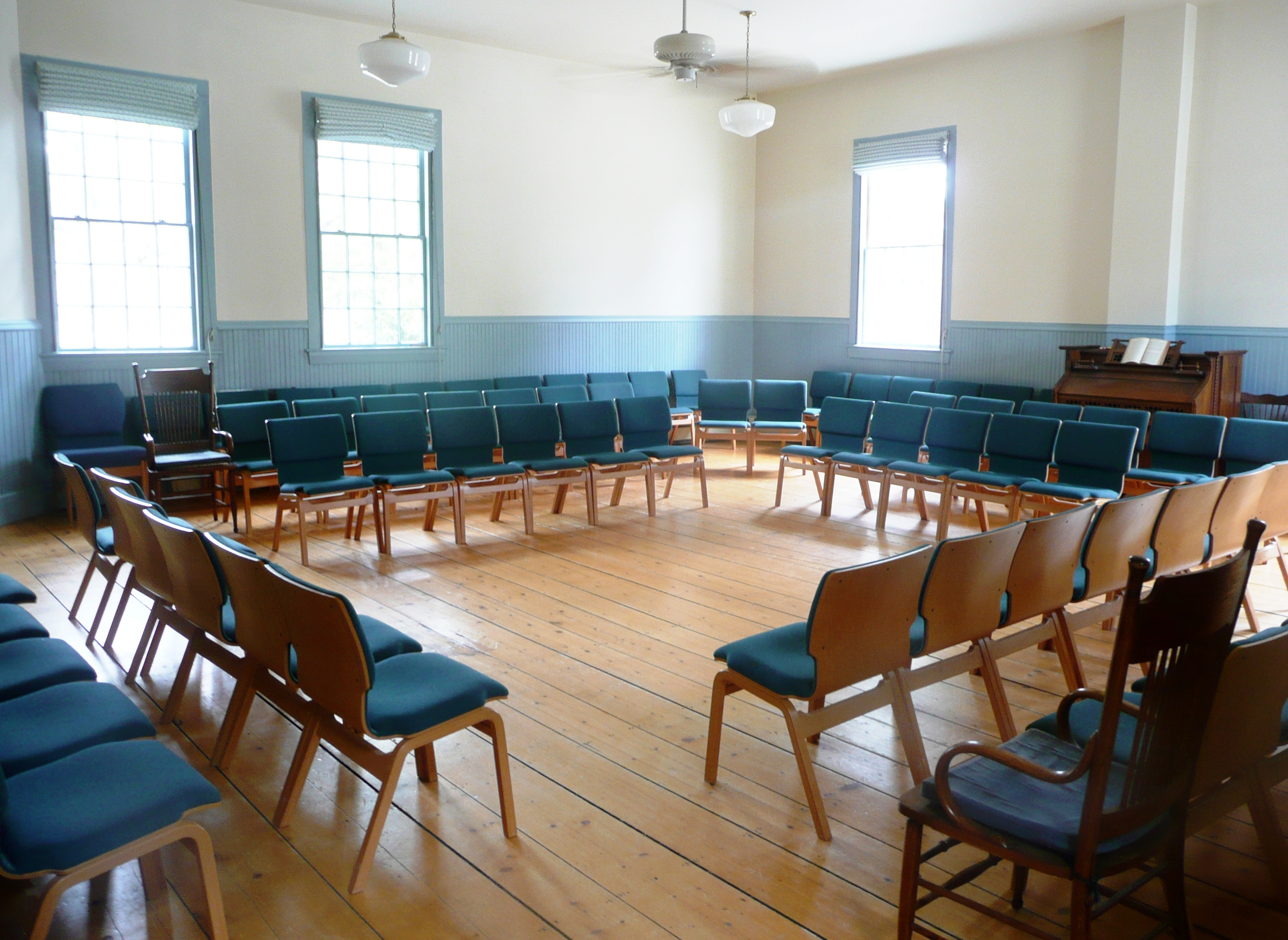
It was at Meeting for Worship at my spiritual community, my Sangha, Portland Friends Meeting, that I touched this fresh and clear essence; a spaceless space without thoughts. During the same hour, I also felt sadness and loneliness. I knew those feelings have been trying to be heard, but I have been running away. They have felt like too much. I sat, breathing in and breathing out. Practicing being fully present in that moment.

Sometimes at Meeting, I feel moved to speak out loud. Not frequently, which is notable for me (I’m a talker). Today, I knew I wanted the community to carry me, to comfort me, to help me be present with my sadness and my loneliness. I don’t want to run anymore. My eyes filled with tears a few times. I felt scared the sadness, now that I was mindfully present with it, would consume me. I considered speaking. I thought of mentioning I would like to be held in the Light when it came time during Meeting to make such requests.
Then I thought about why I don’t often tell people I’m hurting; the people I know are loving and caring and generous and they would want me to know they care — what a wonderful “problem!” So much love! But, when I feel this tender I need to be mostly alone. I knew Meeting was the perfect place for me just then. I needed the Meeting to carry me while I felt this sadness and loneliness. I knew I didn’t need to ask for anything. We were all there together sharing that spiritual space.
When people did speak, there were powerful messages. I was able to be fully present in myself while witnessing the Light in others.
At some points my mind did wander, of course. I thought about the feeling that the meeting was carrying me and marveled at how different my life is these days. I thought of a post I shared on here some years ago about being carried by a crowd at a concert. A very different kind of carrying. A very different kind of trust — mostly misplaced trust in the case of the music event. My idea of a good time now compared to then couldn’t be anymore different.
Tonight I’m going to get together with a bunch of alcoholics who are in recovery. Similar to Friends Meeting, tonight we will spend time as a group together in meditation. It is another community where if I wanted to say “I am hurting” I could do it and I would receive comfort from people who truly care. Again, comfort in such a direct way isn’t what I need. Meditation with my spiritual communities, listening to what other people say (“getting out of myself” as we in the 12-step communities like to say), and staying connected to the present moment is how I will walk through this sadness. The sadness, the loneliness, and the despair will all grow smaller as I care for them and tend to other aspects of my life that bring me gratitude and comfort and peace.

Being single on Valentine’s Day is meh. As any of my exes will attest, I’ve never been sentimental about the holiday. Despite the long, interesting, and muddled history of it, I have always associated Valentine’s Day with “just another excuse cooked up by mega-corporations for people to feel like they should be consumers of stuff they don’t actually need.” Still, as I said, being single on this day is meh. Not awful, but not wonderful.
In the last few days, I found myself looking forward to the day. I decided I’d make a special breakfast, do some fun stuff with the girls during the day, and we were supposed to go see the movie Babe at the Friends School of Portland (but the snow cancelled that). Planning with my younger daughter, we decided on heart shaped pigs in a blanket for breakfast, and chocolate dipped strawberries during the day.IMG_0083IMG_0082
As I set out the plates last night, knowing I’d be dragging myself out of bed a lot earlier than I’d prefer (my children have not mastered the concept of sleeping “late”), I started enjoying myself. I’ve decided to throw myself into the holiday, doing some things that will hopefully become traditions. I love the idea that my daughters can associate Valentine’s Day with not-romantic love memories. Then, when they are adults, if they find themselves without a love interest on Valentine’s Day, they may not feel the day is “meh.” Maybe they’ll start their own Valentine’s Day not-romantic love traditions. And maybe they’ll give their dear old mum a call because it’s a day we always celebrated together when they were little.
IMG_0281

“For me, trees have always been the most penetrating preachers. I revere them when they live in tribes and families, in forests and groves. And even more I revere them when they stand alone. They are like lonely persons. Not like hermits who have stolen away out of some weakness, but like great, solitary men, like Beethoven and Nietzsche. In their highest boughs the world rustles, their roots rest in infinity; but they do not lose themselves there, they struggle with all the force of their lives for one thing only: to fulfill themselves according to their own laws, to build up their own form, to represent themselves. Nothing is holier, nothing is more exemplary than a beautiful, strong tree. When a tree is cut down and reveals its naked death-wound to the sun, one can read its whole history in the luminous, inscribed disk of its trunk: in the rings of its years, its scars, all the struggle, all the suffering, all the sickness, all the happiness and prosperity stand truly written, the narrow years and the luxurious years, the attacks withstood, the storms endured. And every young farmboy knows that the hardest and noblest wood has the narrowest rings, that high on the mountains and in continuing danger the most indestructible, the strongest, the ideal trees grow.
Trees are sanctuaries. Whoever knows how to speak to them, whoever knows how to listen to them, can learn the truth. They do not preach learning and precepts, they preach, undeterred by particulars, the ancient law of life.
A tree says: A kernel is hidden in me, a spark, a thought, I am life from eternal life. The attempt and the risk that the eternal mother took with me is unique, unique the form and veins of my skin, unique the smallest play of leaves in my branches and the smallest scar on my bark. I was made to form and reveal the eternal in my smallest special detail.
A tree says: My strength is trust. I know nothing about my fathers, I know nothing about the thousand children that every year spring out of me. I live out the secret of my seed to the very end, and I care for nothing else. I trust that God is in me. I trust that my labor is holy. Out of this trust I live.
When we are stricken and cannot bear our lives any longer, then a tree has something to say to us: Be still! Be still! Look at me! Life is not easy, life is not difficult. Those are childish thoughts… . Home is neither here nor there. Home is within you, or home is nowhere at all.
A longing to wander tears my heart when I hear trees rustling in the wind at evening. If one listens to them silently for a long time, this longing reveals its kernel, its meaning. It is not so much a matter of escaping from one’s suffering, though it may seem to be so. It is a longing for home, for a memory of the mother, for new metaphors for life. It leads home. Every path leads homeward, every step is birth, every step is death, every grave is mother.
So the tree rustles in the evening, when we stand uneasy before our own childish thoughts: Trees have long thoughts, long-breathing and restful, just as they have longer lives than ours. They are wiser than we are, as long as we do not listen to them. But when we have learned how to listen to trees, then the brevity and the quickness and the childlike hastiness of our thoughts achieve an incomparable joy. Whoever has learned how to listen to trees no longer wants to be a tree. He wants to be nothing except what he is. That is home. That is happiness.”

Hermann Hesse’Bäume: Betrachtungen und Gedichte [Trees: Reflections and Poems] (public library), originally published in 1984